How https://chat.crushon.ai/anime-ai Is Changing the Way Fans Create Anime Characters
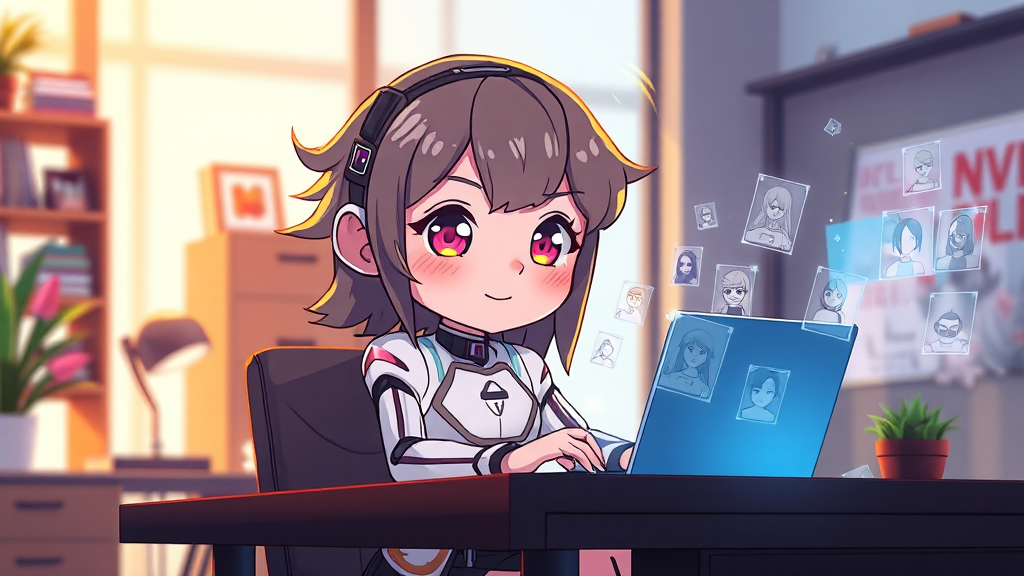
Anime fandom has always been a creative culture. Long before streaming made Japanese animation a global daily habit, fans were sketching original characters in notebooks, writing fan fiction, and building cosplay from scratch. What has changed in recent years is the speed and accessibility of that creativity. Today, a single browser tab can turn a rough idea into a fully realized anime-style character. That shift is exactly what https://chat.crushon.ai/anime-ai represents: a focused space where anime-inspired visuals and conversational AI meet, giving fans, writers, and artists a fast way to explore character ideas without needing a studio or a graphics tablet.
This article looks at why anime-focused AI tools have become so popular, what practical use cases they unlock, how to get better results from them, and what ethical questions creators should keep in mind as the technology matures.
Why Anime Is a Natural Fit for Conversational AI
Anime art has a visual grammar that is remarkably consistent across decades and genres. Large expressive eyes, stylized hair, distinct silhouettes, and clear color palettes make characters instantly readable. That consistency is a gift for AI systems. When a model understands the underlying rules of anime design, it can respond to short, natural-language prompts and still produce something that feels authentic to the style.
Conversational interfaces take this a step further. Instead of forcing users to learn complex prompt syntax, a chat-based tool lets people describe what they want the way they would describe it to a friend. “A shy high school student with silver hair and a worn-out school uniform” is enough to begin. From there, the conversation can refine details: the mood of the scene, the era, the color scheme, the pose, the background. This iterative back-and-forth is much closer to how real character design works in a studio, where a concept artist revises a sketch dozens of times before it is approved.
From Rough Idea to Finished Character in Minutes
The biggest practical change is time. Traditional character design can take hours or days depending on the level of polish. An anime AI chat tool compresses the early exploration phase dramatically. A writer who needs to visualize a cast of six characters can generate rough concepts for all of them in a single sitting, then decide which directions are worth developing further.
That speed matters for several groups in particular:
- Fan fiction writers who want consistent visual references for their original characters.
- Tabletop role-players who need portraits for a campaign on short notice.
- Indie game developers prototyping character rosters before committing to paid art.
- Cosplayers brainstorming costume concepts and color variations.
- Social media creators who build anime-style avatars and personas for their channels.
None of these users necessarily want to become professional illustrators. They want to communicate an idea visually, and that is where a conversational anime AI tool earns its place in the workflow.
What to Look For in an Anime AI Chat Tool
Not every AI image tool handles anime well. General-purpose image generators often produce faces that look slightly off — eyes too realistic, proportions too Western, hair that reads as plastic. When evaluating a tool for anime work, a few qualities matter more than raw megapixels.
Style Consistency
Can the tool maintain a recognizable style across multiple generations? If you generate the same character five times, do they still look like the same person? Consistency is what separates a novelty toy from a usable design assistant.
Conversational Refinement
A good chat interface remembers context. If you say “make the jacket red instead of blue,” the tool should understand that you are modifying the previous image, not starting over. This is where chat-based design genuinely outperforms one-shot prompt boxes.
Speed and Accessibility
Browser-based tools that load quickly and work without installing heavy software lower the barrier for casual users. A student on a laptop should be able to experiment just as easily as someone with a high-end desktop.
Safety and Content Controls
Responsible platforms include guardrails that keep outputs appropriate and respect copyright boundaries. This protects users and keeps the creative community healthy.
Practical Prompting Tips for Better Anime Results
Even with a friendly chat interface, the quality of your output depends on the quality of your description. A few habits make a noticeable difference.
Be specific about the archetype. “Anime girl” is vague. “Cheerful tomboy with short teal hair, athletic build, and a varsity jacket” gives the model something to work with.
Mention the mood and lighting. Warm sunset lighting, cool moonlight, or harsh neon all change the emotional read of a character. Anime relies heavily on atmosphere, so include it.
Reference a genre, not a specific artist. Saying “90s shonen style” or “soft slice-of-life aesthetic” communicates a look without borrowing someone else’s identity. This is both more ethical and more effective.
Iterate in small steps. Change one thing at a time. If you alter the hairstyle, the outfit, and the background all at once, you lose track of what worked.
Save your best prompts. When a prompt produces a great result, keep it. Reusable prompt templates are the fastest way to build a consistent character library.
Ethics, Copyright, and the Future of Fan Creation
Any honest discussion of AI art has to address the elephant in the room. Anime AI tools are trained on large datasets, and the creative community has legitimate questions about consent, attribution, and compensation. These debates are not going away, and they should not be dismissed.
For individual users, a few principles help:
- Do not attempt to replicate a living artist’s signature style and pass it off as original work.
- Be transparent when AI tools contributed to a project, especially in commercial contexts.
- Support human artists alongside AI tools. Many creators use AI for ideation and then commission a human artist for final production art.
- Respect platform terms of service and local laws regarding generated content.
Looking ahead, the most likely outcome is not AI replacing artists but AI becoming another tool in the creative toolkit — much like digital tablets replaced neither traditional painters nor the demand for skilled illustrators. The people who thrive will be those who learn to direct the tool well.
Who Benefits Most from Anime AI Chat Platforms
The audience for anime-focused AI is broader than it first appears. It includes hobbyists who never considered themselves artists, professionals looking for faster concepting, and educators who use anime aesthetics to make learning materials more engaging. Language teachers, for example, sometimes generate anime-style characters to anchor vocabulary lessons. Small businesses in the anime merchandise space use AI concepts to test designs before committing to manufacturing runs.
What unites these users is a need for speed and accessibility. They are not trying to replace the craft of illustration; they are trying to move from an abstract idea to a concrete visual so they can make a decision, tell a story, or share something with a community.
Getting Started Without Overthinking It
The best way to understand what anime AI can do is to try it with a low-stakes project. Pick a character you already know well — maybe one from a story you are writing — and describe them in three sentences. See what comes back. Then refine. Change the hair color. Adjust the expression. Add a background. Within a few exchanges, you will have a clearer sense of how the tool thinks and how to steer it.
From there, you can scale up to more ambitious projects: full character sheets, scene illustrations, or a consistent cast for a long-form story. The technology is improving quickly, and the gap between a casual experiment and a polished result is shrinking every month.
FAQ
What is an anime AI chat tool?
It is a conversational platform that generates anime-style images based on natural-language descriptions. Instead of writing complex prompt syntax, you describe a character or scene in plain language and refine the result through back-and-forth conversation.
Do I need drawing skills to use it?
No. The entire point of a chat-based anime AI tool is to lower the barrier for people who have ideas but not technical art skills. Being able to describe what you want clearly is more important than being able to draw it.
Can I use AI-generated anime characters commercially?
That depends on the platform’s terms of service and your local laws. Many tools allow commercial use with certain conditions, but you should always read the fine print and consider whether the output is truly original enough for your intended use.
Is it ethical to create anime art with AI?
The ethics are still being debated. A reasonable approach is to avoid mimicking specific living artists, be transparent about AI involvement, and continue supporting human artists. AI works best as a supplement to human creativity, not a replacement for it.
How can I get more consistent characters across multiple images?
Use detailed, repeatable descriptions and keep your prompt structure stable. Change only one variable at a time, and save the prompts that produce your best results so you can reuse them.